
Hamlet
By William Shakespeare
Produced by Texas Tech University in the Charles E. Maedgen Jr. Theater
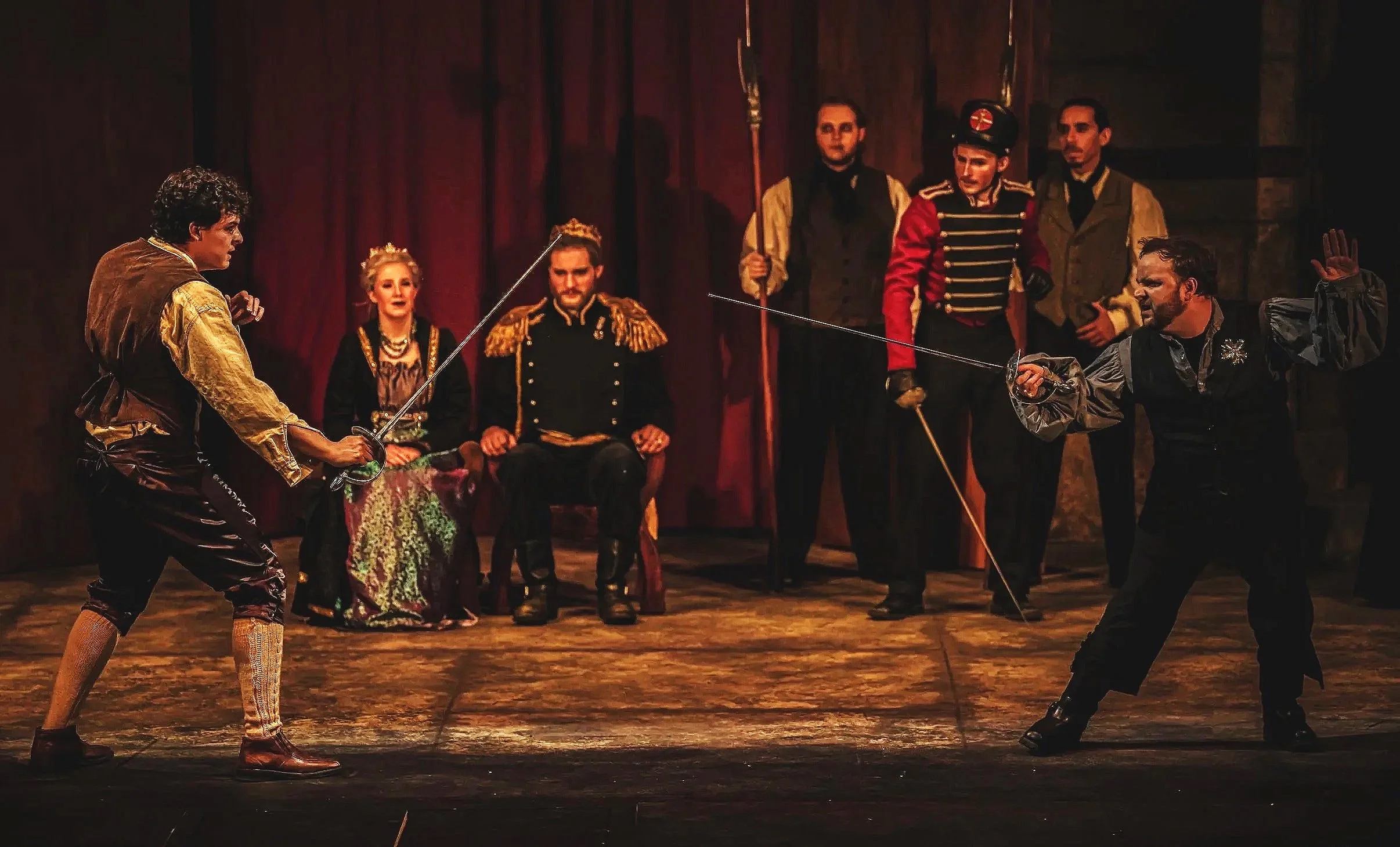
For this production of Shakespeare’s Hamlet, I was presented with the offer to collaborate with Dr. Mariani at the Texas Tech School of Music, who possesses great knowledge of Shakespeare’s plays and their musical history. Together, we created a list of moments in the show for which we felt music would be effective and meaningful, and, informed by her insight, we determined which musical pieces to use and what we needed to create ourselves. Then, Dr. Mariani gathered musicians from the School of Music and created recordings of all the pieces on our list.
The Maedgen Theatre in the Texas Tech University School of Theatre & Dance is equipped with an immersive sound system powered by Meyer Spacemap Go. This production was my first opportunity to learn the program and begin playing with immersive sound.
Audio Samples
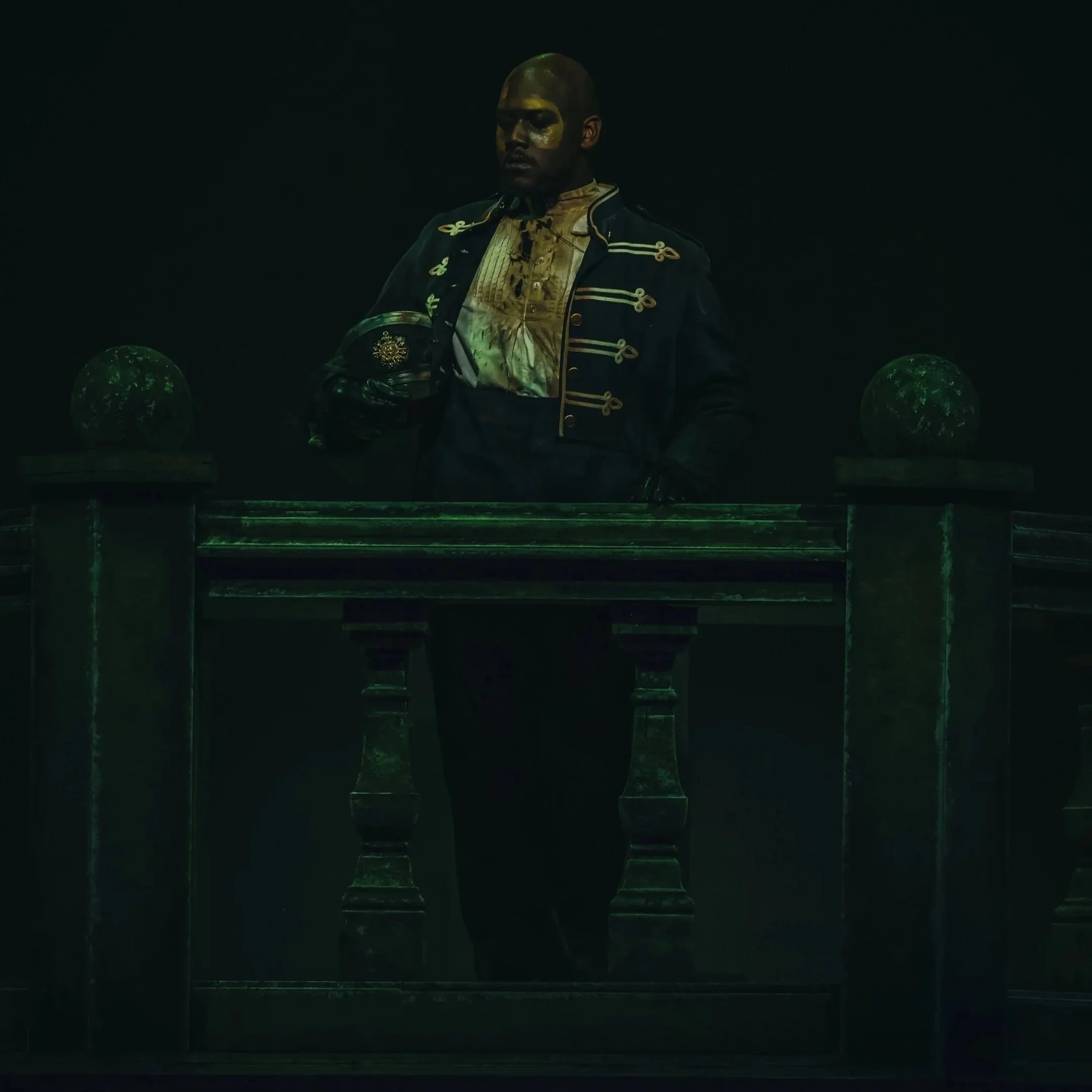
For all of the ghost’s appearances, I used this soundscape consisting of two parts, the music and the whispering, that moved around the space in different patterns. When the ghost exited stage, the soundscape would stop where it was and travel all the way to the upstage wall before disappearing with the performer.
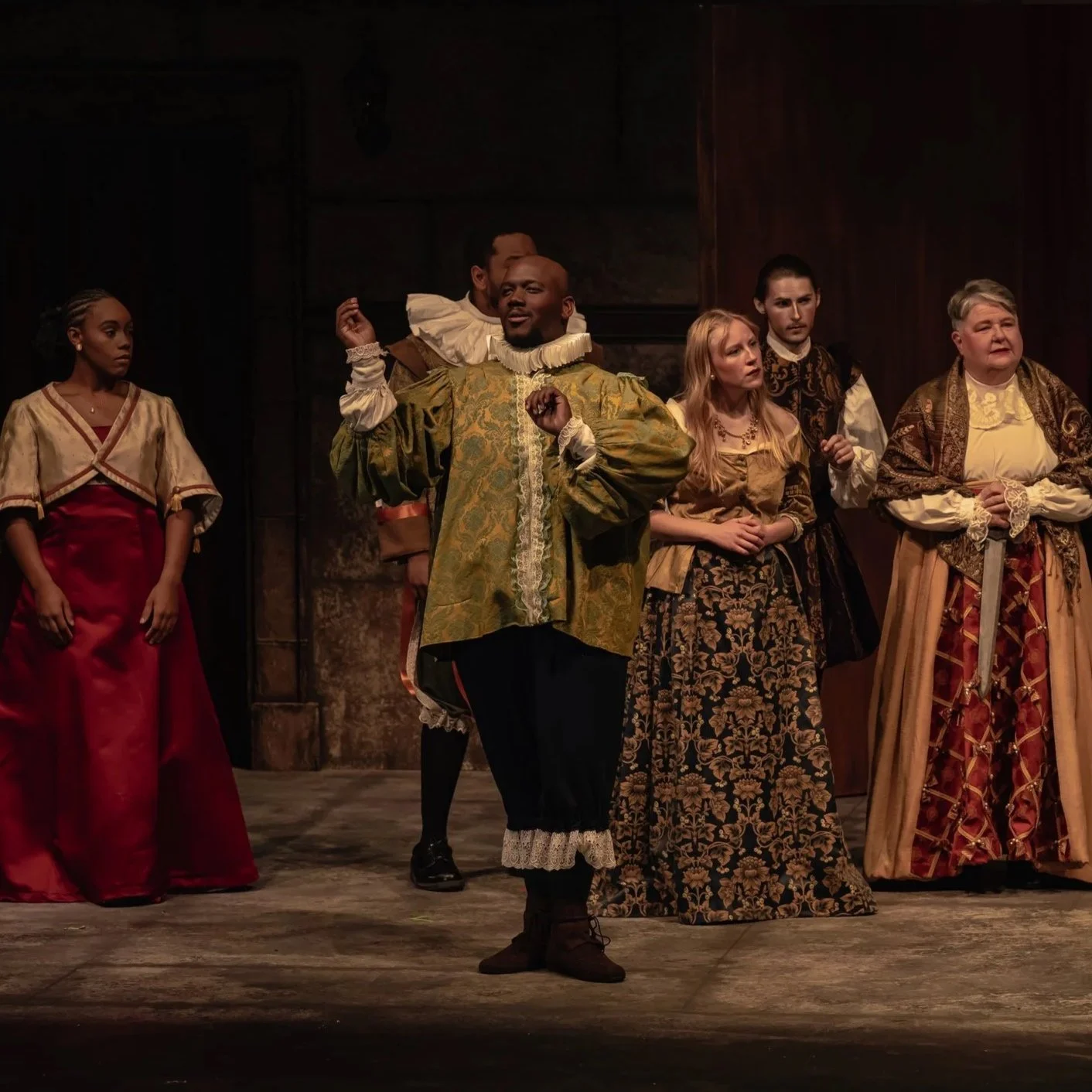
Dr. Mariani recorded this wonderful piece for the Players. The script specifically calls for a “flurry of trumpets and Danish march” when they arrive, but I had no luck finding a Danish march that existed during the Renaissance. Fortunately Dr. Mariani was able to use her expertise to discover a Danish march that predates the modern one, and predates Shakespeare’s birth. We felt it was perfect because it was more than likely what he was referring to when he wrote those stage directions.
Stage Speaker Plot
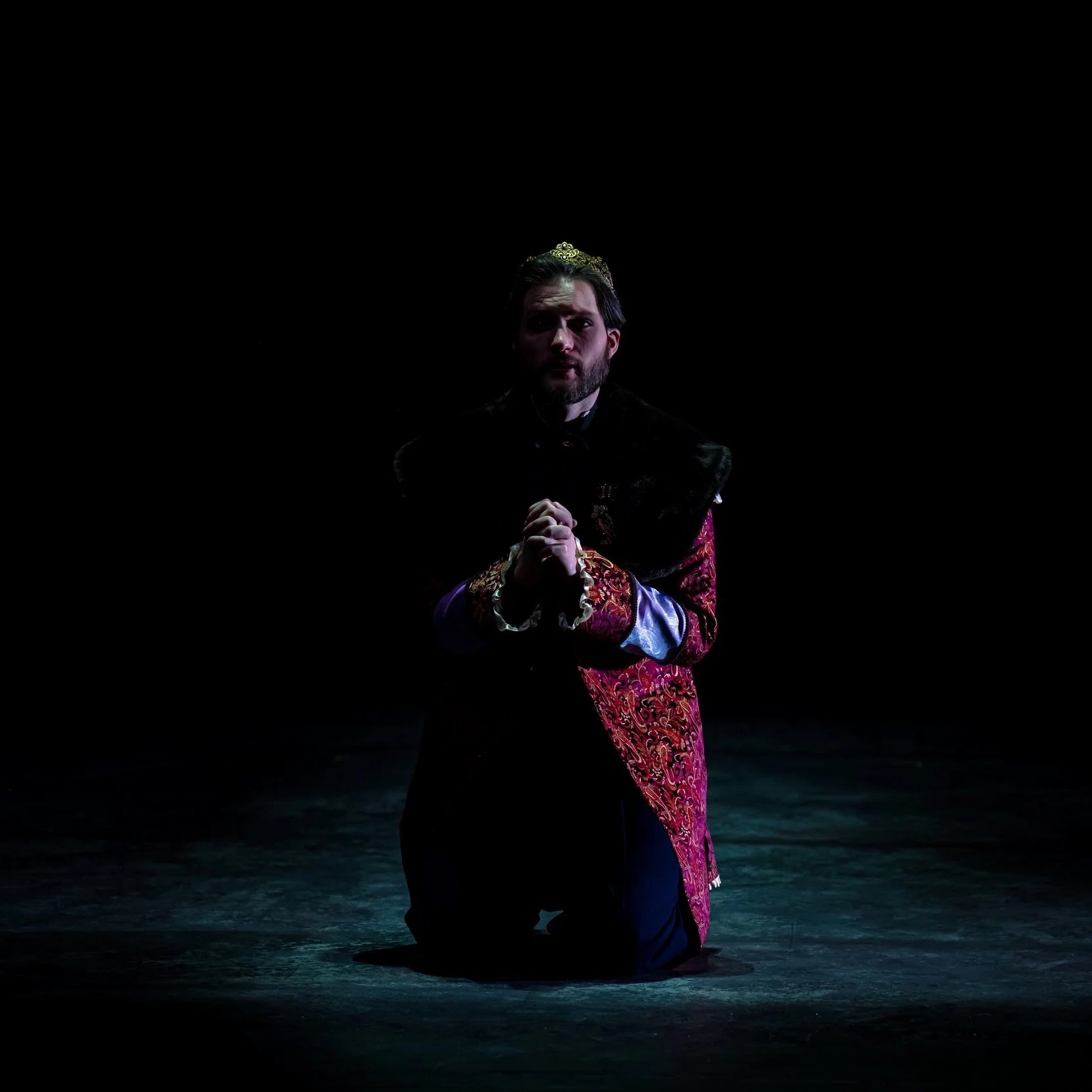
In our production, during the scene in which Claudius prays in the church, the moment Hamlet raises his sword to kill him there was a blackout and the intermission immediately followed. Upon returning to the show, it began right at that same moment and led into Hamlet determining he would rather wait to kill Claudius. Because of this, I wanted to use some suspenseful and dramatic music that would lead the audience into this scene and build in tension right up to the “cliffhanger” and continue into the darkness for a few moments.
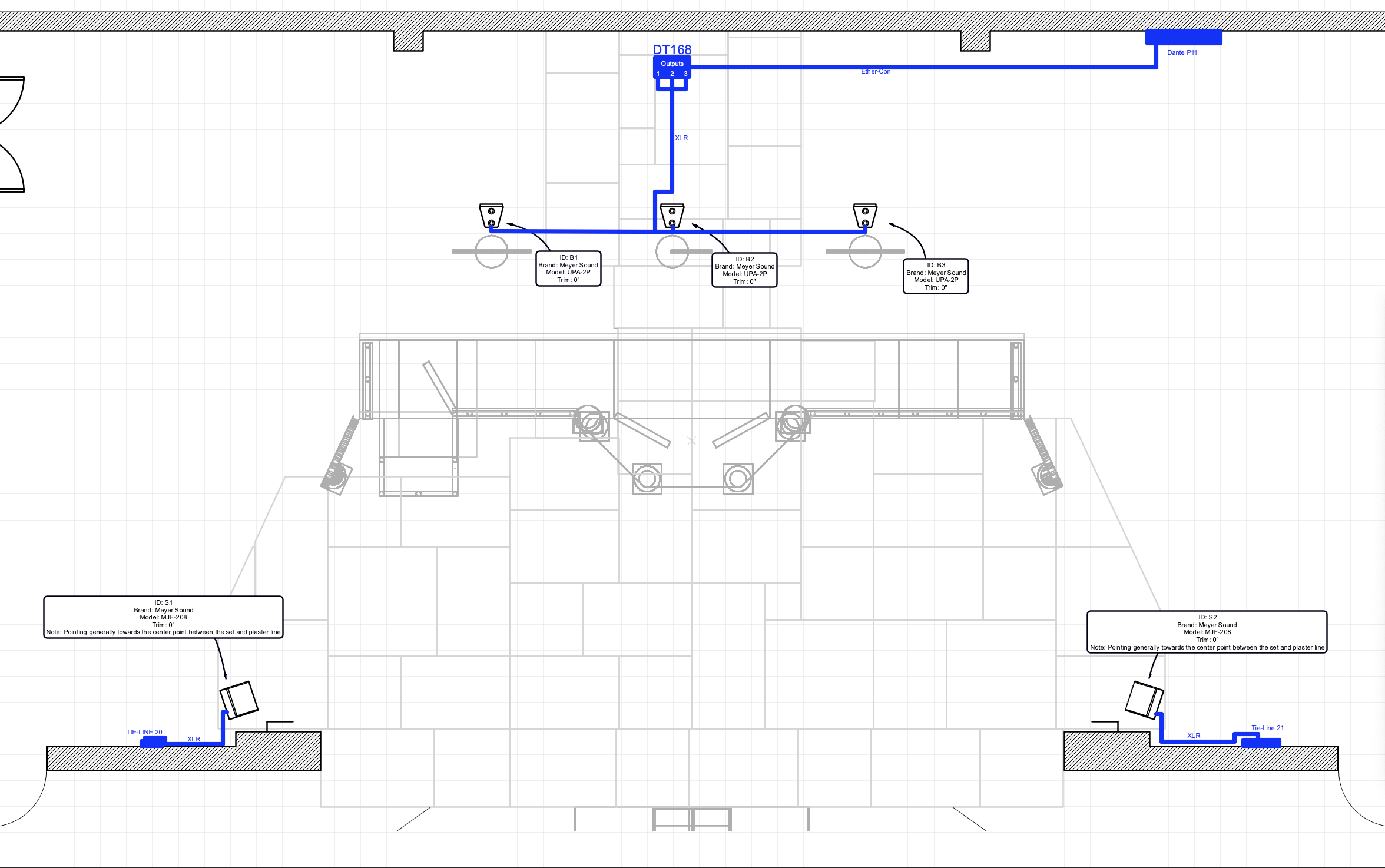
In order to make the diegetic music and sound effects appear to be truly coming from within the castle, I placed these five speakers on the stage. The upstage speakers face away from the set wall to send the sound bouncing around backstage before making it out to the house. This was to feign the effect of distance, reflection, and dispersion in a natural way. This was used for cannon fire, the fanfare announcing the arrival of the players, and Laertes’s busting through the castle doors. Additionally, because the Maedgen theatre’s Spacemap Go system is only set up to go as far as the proscenium wall, the stage speakers allowed me to continue moving sound upstage. Where Spacemap Go stopped, I would take sound the rest of the way with QLab fade cues. This was used to create an effect for the ghost wherein as he leaves the stage, the aural atmosphere surrounding him follows him upstage and disappears with him, following him as though it is tied to him.